Embossing vs Debossing: Raised and Recessed Print Finishes
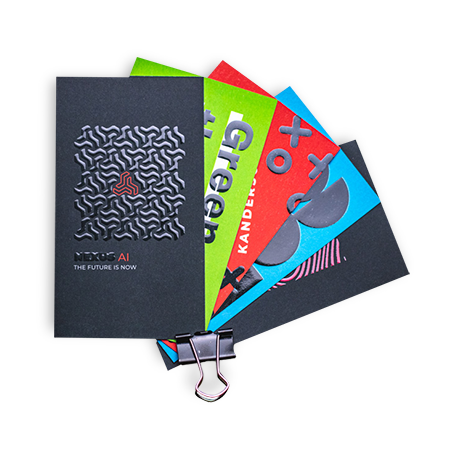
Embossing raises part of a printed piece, a logo, a monogram, a pattern, above the surface of the paper. Debossing is the mirror image: the design is pressed down into the sheet. Both are made the same way, by pressing the paper between a custom metal die and a counter-die, which is why they share one entry.
The result is a finish you read with your fingertips as much as your eyes. Blind embossing (no ink, just the raised shape) is the most understated version; embossing can also register over printed art or foil for a stronger effect.
How the die shapes the paper
A metal die carrying the design is pressed into the sheet under heat and pressure, stretching the paper fibres permanently. Because the die is custom-made, embossing carries a real setup cost, which is why it suits identity pieces printed in quantity, not one-off runs. Thicker, uncoated stocks hold the deepest, crispest impression; very glossy coatings can crack on sharp edges.
What your file needs
The die is cut from a vector shape, so an embossed area needs the same thing a cut line does: a clean vector outline on its own layer, not a flattened image. Fine lines and small text fill in, exactly as they do with spot UV masks, so keep shapes bold and give them room.
Which one for your job?
Choose embossing or debossing when the piece is a long-lived identity item, letterhead, premium packaging, a flagship card, and the budget carries a die. For a raised, tactile look without die costs, spot UV is the finish we run in-house on our Duplo coater: it delivers the raised-gloss effect on cards and covers at everyday turnaround. Bring the design and we will tell you honestly which route fits.
Common questions
What is the difference between embossing and debossing?
Direction. Embossing raises the design above the paper surface; debossing presses it below. The tooling and file requirements are the same, and many designs work in either direction, raised reads bolder, recessed reads more discreet.
Can embossing be combined with ink or foil?
Yes. Registered embossing raises an area that is also printed or foiled, while blind embossing leaves it unprinted for a tone-on-tone look. Registration between the die and the printed art must be exact, which adds setup care.
Why is embossing more expensive than spot UV?
The custom metal die. Spot UV is applied from a digital file with no physical tooling, so it delivers a raised, glossy accent at a fraction of the setup, which is why we steer short runs toward spot UV first.
Products where this term matters
See also in the dictionary: Spot UV, Foil stamping, Paper weight and finishes · full dictionary
Not sure what your file or paper needs? Choosing is part of the job, we advise at 514.844.0388.
Browse products and order