What Is UV Printing? How UV-Cured Ink Prints on Signs, Vinyl and More
UV printing uses inks that are cured, hardened in a fraction of a second, by ultraviolet light right after they land, instead of drying slowly by evaporating or soaking into the material. Because the ink sets on the surface the moment it is printed, it can go onto materials that ordinary inks cannot handle well: plastic boards, vinyl, and other non-absorbent surfaces.
The cured ink is tough and weather-resistant, and the piece can be handled, cut and packed right away.
Flatbed and roll UV printing
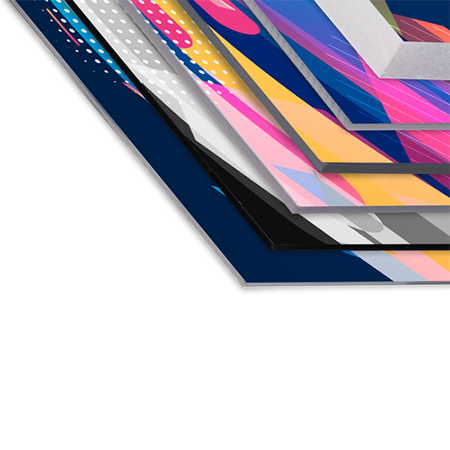
UV printers come in two shapes. A flatbed holds a rigid sheet still while the print head passes over it, so it prints straight onto boards; ours is an Océ Arizona, which prints our solid signs on coroplast, foamcore, PVC and other rigid materials. A roll printer feeds flexible material from a roll; our Canon Colorado prints banners, posters and other roll media up to 54 inches wide.
What UV printing changes for your sign
Printing directly on the board means no mounted paper print that can peel at the edges, and UV ink is weatherproof without lamination, which is why a UV-printed coroplast sign can go straight outdoors. It also means the colours sit on the surface, so the board's own colour matters: white boards give the truest colours.
UV printing, spot UV and latex
Spot UV uses the same curing idea for a clear gloss varnish applied to chosen areas, on our Duplo spot coater, not for printing colour. Our HP Latex 365 is a different technology: water-based latex inks cured by heat, used for our adhesive vinyl.
Which one for your job?
You rarely choose the ink yourself: the material decides. Rigid signs print UV on the flatbed; banners and large posters on UV or latex roll printers depending on the material; paper pieces like cards and flyers on our Xerox Versant digital press. Tell us what the piece is and where it will live, and we route it to the right press.
Common questions
Is UV printing waterproof?
UV-cured ink is water- and weather-resistant once cured, which is why UV-printed rigid signs go outdoors without lamination. The material underneath still has to suit the location.
What is the difference between UV printing and spot UV?
UV printing applies coloured ink cured by UV light. Spot UV applies a clear gloss varnish, also UV-cured, on selected areas of an already printed piece, as a finish.
Can UV printing go directly on a board?
Yes, that is its main advantage. On a flatbed UV printer the ink goes straight onto coroplast, foamcore, PVC and similar boards, with no paper print to mount.
Products where this term matters
See also in the dictionary: Coroplast, Spot UV, Vinyl vs mesh banners · full dictionary
Not sure what your file or paper needs? Choosing is part of the job, we advise at 514.844.0388.
Browse products and order