What Is Coroplast? Corrugated Plastic for Signs, Explained
Coroplast is corrugated plastic board: two thin polypropylene walls joined by rows of ribs called flutes, built like cardboard but made of plastic. It is light, waterproof and inexpensive, which makes it the standard material for lawn signs, election signs, real-estate signs and construction-site signs.
The name is a brand that became the everyday word for the material, the way people say "Kleenex". Suppliers also call it corrugated plastic or fluted polypropylene.
Thickness and sizes
Coroplast is sold in several thicknesses; signs most often use 4 mm or 6 mm, and those are the two we print on, in white. 4 mm is the everyday lawn-sign board; 6 mm is stiffer and holds flatter at larger sizes or in wind. Our rigid signs come in standard sizes from 18 x 24 in up to 48 x 96 in, a full 4 x 8 ft sheet. We print directly on the board with UV ink on our Océ Arizona flatbed, so the print is weatherproof without lamination, and custom shapes are cut on our Colex SharpCut.
Outdoors, H-stakes and grommets
Coroplast does not rot, swell or mind rain, which is why it lives outdoors. It is still a temporary-sign material: long sun exposure eventually makes the plastic brittle, and large thin panels flex in wind. Lawn signs stand on wire H-stakes, whose prongs slide into the flutes, so the flutes have to run vertically: for a yard sign, mention it to the shop. To hang a sign instead, our solid signs can take grommets in all 4 corners or the top corners only, and every 18 or 24 in on the larger sizes.
Coroplast vs other rigid boards
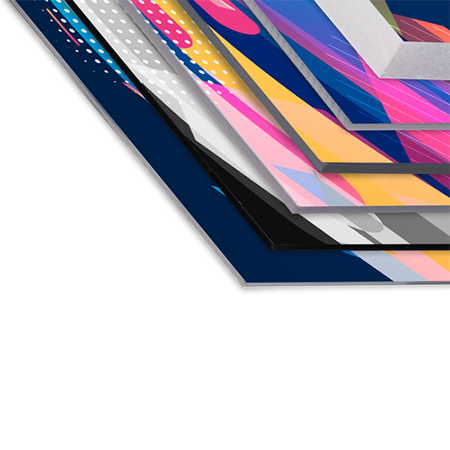
Foamcore (3/16 or 3/8 in) is lighter and smoother but dents and does not belong outdoors. Sintra (3 mm PVC) has a smooth, solid face for indoor or sheltered outdoor signs that must look refined. Styrene (30 mil) is a thin rigid plastic for wall-mounted and point-of-sale signs. For permanent exterior signage, aluminum composite (dibond) is the step up; ask the shop about it and other materials.
Which one for your job?
Choose coroplast for signs that go outdoors for weeks or a season: lawn, election, open-house, job-site and event signs. Choose foamcore or Sintra for indoor signs that should look smooth and finished, and aluminum composite for signs meant to stay up for years. Tell us where the sign will live and we will match the board.
Common questions
Is coroplast waterproof?
Yes. Polypropylene does not absorb water, so rain and snow do not damage the board, and UV-printed ink is weatherproof on its own. Sun exposure over time is what ages it.
How thick is a coroplast sign?
Most signs use 4 mm or 6 mm board. We print on both: 4 mm for standard lawn signs, 6 mm when the sign is large or exposed to wind.
How do you put a coroplast sign in the ground?
With a wire H-stake: its two upper prongs slide into the flutes at the bottom of the sign and the lower prongs push into the ground. The flutes must run vertically for this to work.
Products where this term matters

See also in the dictionary: Grommets, Poster sizes, DPI vs PPI · full dictionary
Not sure what your file or paper needs? Choosing is part of the job, we advise at 514.844.0388.
Browse products and order